
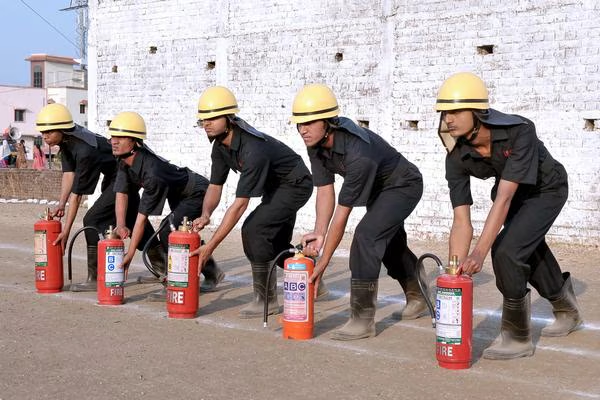
Diploma in Fire and Safety Management

This one year program offers a complete introduction to the principles of fire prevention, workplace safety, emergency response, and basic disaster management. It is designed for learners who want to start a professional career in safety departments across industries, commercial establishments, construction projects, and public organisations. The two semester pattern allows students to progress smoothly from foundational concepts to practical applications used in real safety operations.
Course Highlights
-
Basics of Fire Science and Fire Behavior
This section explains how fire begins, spreads, and reacts with different materials. Students learn about fire classes, combustion processes, ignition factors, and the science behind controlling fire effectively. -
Fire Prevention Measures and Safety Planning
This part teaches inspection methods, hazard identification, fire load evaluation, and workplace safety planning. Learners understand how preventive strategies reduce risks and protect life and property. -
Fire Protection Systems and Equipment Handling
Students study various firefighting tools, extinguisher types, detection systems, alarms, hose reels, and sprinkler installations. Practical demonstrations help them understand correct usage and maintenance needs. -
Industrial Safety and Workplace Hazard Control
This module introduces mechanical, electrical, and chemical hazards found in work environments. It covers accident prevention techniques, risk control measures, and safety policies that support safer operations. -
Emergency Response and Evacuation Procedures
This section explains emergency communication methods, evacuation routes, rescue techniques, and command structures used during critical situations. Drills allow learners to practice controlled and confident responses. -
Occupational Health and Safety Legislation
Students gain an understanding of safety laws, compliance requirements, documentation procedures, and regulatory guidelines that govern safe work practices in industries and institutions. -
Basic First Aid and Life Support Skills
This part provides essential medical response training such as handling burns, fractures, bleeding, and shock. Learners gain confidence in offering immediate assistance before professional help arrives. -
Introduction to Disaster Management Concepts
The module offers an overview of natural and man made disasters, preparedness strategies, mitigation steps, and community safety awareness. It shows how planned responses reduce the impact of emergencies.
Outcome of the Program
After completing the diploma, students become capable of working in entry level roles such as fire safety assistant, fire warden, safety technician, emergency response helper, or junior safety officer. They gain practical skills in fire handling, emergency coordination, safety planning, and hazard identification. The program prepares learners to contribute to safer workplaces and to support organisations in maintaining reliable fire and safety standards.
Want to submit a review? Login