
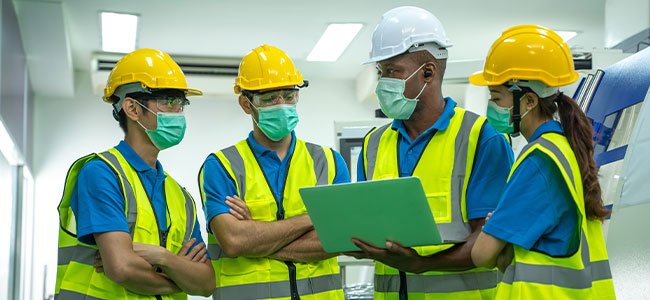
Construction Safety and Industrial Hygiene

This course offers a comprehensive understanding of construction safety and industrial hygiene by combining technical knowledge with practical control strategies used across diverse work environments. It prepares learners to recognize hazards, apply preventive measures, and ensure safe operations in activities involving machinery, chemicals, elevated work, and pressurized systems. Emphasis is placed on protecting worker health through proper equipment handling, exposure control, and compliance with industry standards. Each unit links real world scenarios with essential safety concepts, enabling students to manage risks confidently and effectively.
The course is structured around core units that highlight the following areas:
Hot Works
Students begin by learning the safety practices required for tasks that involve flames, sparks, or high temperatures.
• Identification of hot work activities found in construction and maintenance
• Fire prevention steps, fire watch duties, and permit requirements
• Control of ignition sources, combustible materials, and confined space risks
Mechanical Equipment's
This unit focuses on the safe operation and maintenance of machinery used on construction sites.
• Types of mechanical equipment and their specific hazards
• Importance of guarding, inspection, and operator competency
• Control of pinch points, struck by hazards, and unexpected energy release
Mechanical and Manual Handling
Learners explore methods to prevent injuries during lifting and material movement.
• Proper lifting techniques and ergonomic considerations
• Safe use of mechanical aids such as hoists, trolleys, and forklifts
• Prevention of strains, sprains, and musculoskeletal disorders
Working at Height
This section addresses the critical hazards associated with elevated work.
• Identification of fall risks and appropriate fall protection systems
• Safe use of platforms, harnesses, guardrails, and anchorage points
• Procedures for inspection, access, and prevention of dropped objects
Electrical and Radiation Safety
Students study the precautions needed to work safely around electrical and radiation sources.
• Control of electrical hazards such as shock, arc flash, and short circuits
• Safe work practices for energized equipment and lockout procedures
• Awareness of ionizing and non ionizing radiation and protective measures
Chemical Safety
This unit highlights the health risks and safe handling requirements for hazardous chemicals.
• Identification of chemical hazards using labels and safety data sheets
• Control of exposure through ventilation, substitution, and PPE
• Safe storage, transfer, disposal, and spill response techniques
Compressed Gas Cylinder Safety
Learners study the correct handling and storage of pressurized cylinders.
• Recognition of cylinder types, labelling, and associated hazards
• Safe transport, securing, connection, and usage practices
• Precautions that prevent leaks, explosions, and impact damage
Hydrostatic Pressure Testing
The course concludes with the procedures required for safe pressure testing of systems.
• Principles of hydrostatic testing and reasons for conducting it
• Identification of hazards such as sudden rupture and projectile risks
• Safe setup, monitoring, depressurizing, and documentation practices
This course equips learners with the knowledge and practical skills needed to maintain safe construction environments while protecting worker health through effective industrial hygiene practices.
Want to submit a review? Login